
What happened when the base was tested alongside the cream?
Proksch and Nissen (2002) used sodium lauryl sulphate to irritate skin on volunteers’ forearms. One site received a dexpanthenol cream and another received the cream base. Over the following week, the researchers measured skin hydration and transepidermal water loss (TEWL). Hydration improved compared with the base, and TEWL was lower at some follow-up visits.
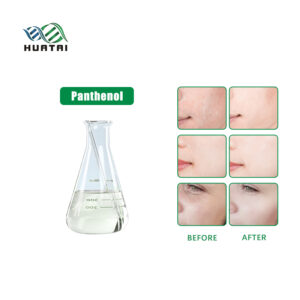
The base earns its place in that study because irritated skin can recover over time, and applying the base can influence the readings. A simple before-and-after test on the dexpanthenol cream would have bundled those effects together. The paper tested D-panthenol. If the lab is working with DL-Panthenol, the comparison is useful to borrow. The performance data need to come from the formula and grade the team plans to use.
A lower TEWL reading can mean different things
A cream can slow water loss while its film is on the skin. If the lab measures TEWL shortly after application, the result may reflect that film. That is a useful measurement if the question is how much water escapes while the product is being worn. For a recovery claim, look for readings before the challenge, immediately afterward and at several points during recovery.
Check the time since the last application when you read the report. A measurement taken shortly after one cream goes on and several hours after the other gives you a difficult comparison to interpret. Recent washing, product residue, room conditions and acclimation can also affect the readings (du Plessis et al., 2013).
A brief that says “hydrates for several hours” calls for a hydration reading at the stated interval. If the claim is about tightness after cleansing, ask people how tight their skin feels after the same cleansing and application routine. Similar hydration readings can go with different impressions of comfort.
Keep the comparison close to the decision
When the question is whether panthenol earns a place in the formula, make a batch of the same base without it. Keep the oil phase and other humectants comparable. If the panthenol preparation contains glycerin, include that contribution when you calculate the total glycerin in the test batch. The control should have the same total if you want to isolate the panthenol addition.
The cream you already sell is a useful benchmark when you’re deciding whether to replace it. Even if several ingredients changed, a comparison can tell you which finished cream better meets the brief. If the team also wants to find out whether panthenol contributed to the improvement, include the matched base in the study.
FAQ
References
- du Plessis, J., et al. (2013). International guidelines for the in vivo assessment of skin properties in non-clinical settings: Part 2. Transepidermal water loss and skin hydration. Skin Research and Technology, 19(3), 265–278.
- Proksch, E., & Nissen, H. P. (2002). Dexpanthenol enhances skin barrier repair and reduces inflammation after sodium lauryl sulphate-induced irritation. Journal of Dermatological Treatment, 13(4), 173–178.





 English
 German
 Italian
 French
 Spanish
 Japanese
 Korean
 Russian